
Bahía Magdalena
Where Whales Meet the Desert
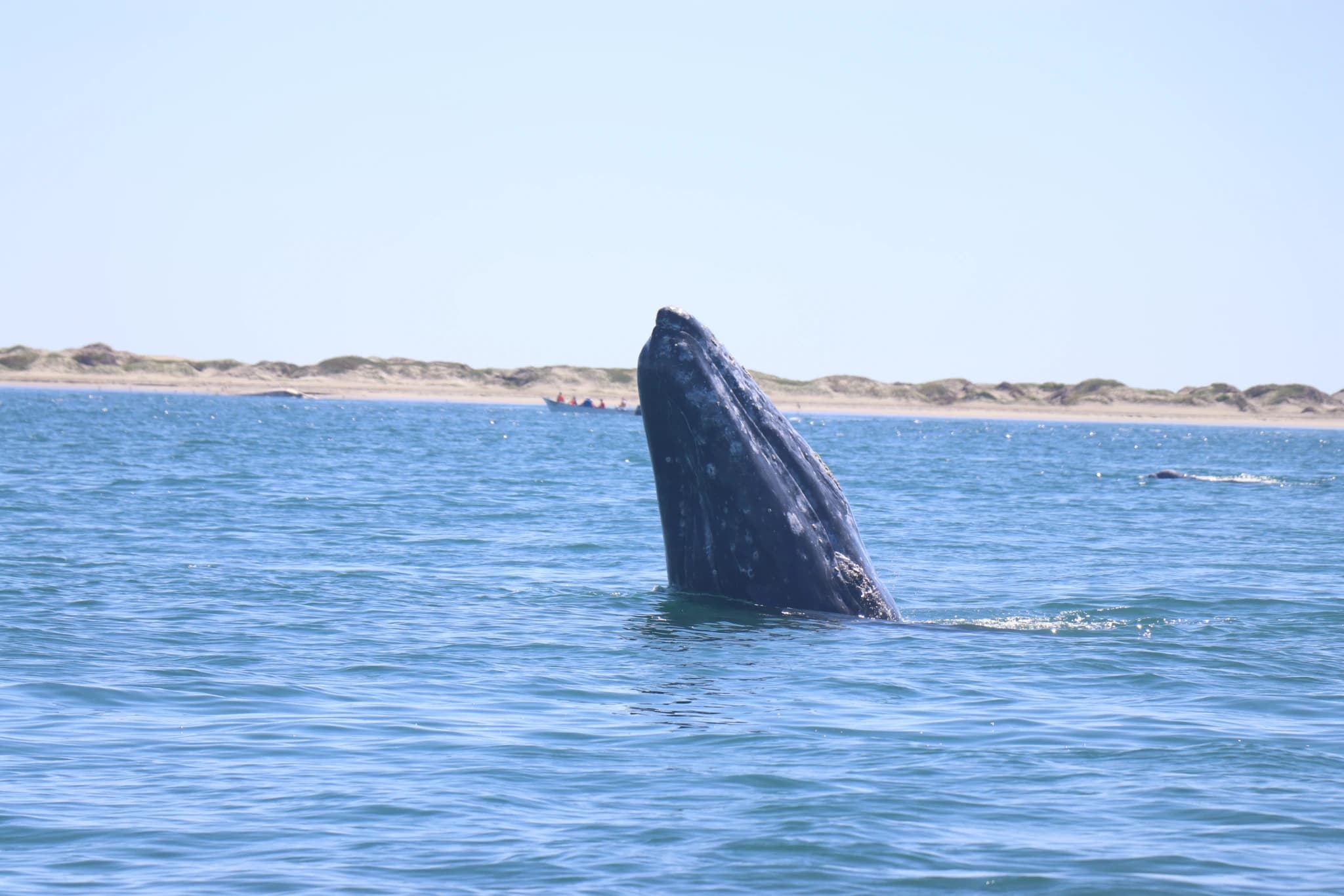
You're in a small panga on a protected lagoon, and a gray whale mother rises beside you — close enough to touch, her eye meeting yours, her calf swimming just beneath her. Bahía Magdalena is where gray whales travel over 10,000 miles to give birth, and you get to witness it from arm's length.
This isn't just whale watching — it's a two-phase expedition that takes you from the intimate lagoon encounters of Bahía Magdalena to the adrenaline-charged waters of Revillagigedo. You'll kayak through mangroves, watch desert wildlife roam untouched shores, and then — in the second half — dive with giant mantas, sharks, and dolphins. Two worlds, one unforgettable trip, and it's all yours.
What You'll See
Gray Whale Encounters
You'll get within arm's reach of gentle gray whales and their newborn calves — a moment so intimate it feels like the whale is choosing to connect with you. It's one of the most profound wildlife experiences on Earth.
Mangrove Channels
You'll paddle a kayak through pristine mangrove channels, the water so clear you can see rays and tropical fish gliding beneath you. Birds call from the branches above. The only sound is your paddle dipping into the water.
Desert Wildlife
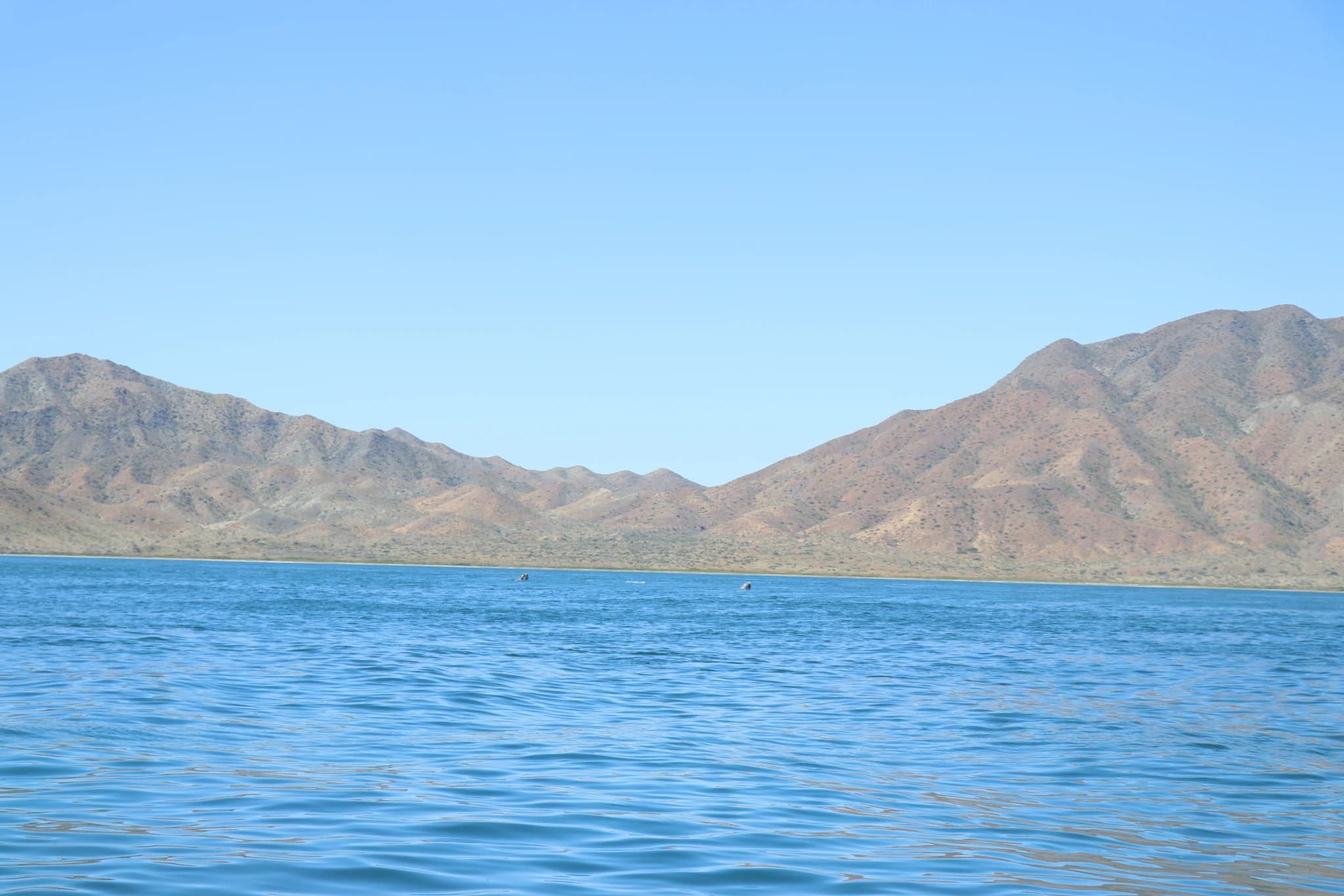
Between whale encounters, you'll explore the unspoiled dunes and remote beaches of Isla Magdalena. Coyotes, osprey, and desert foxes move through the landscape — wild, quiet, and completely indifferent to your presence.
Socorro Diving
The second half of your trip shifts gears entirely. You'll leave the lagoon behind and head to Revillagigedo, where giant mantas, hammerhead sharks, and bottlenose dolphins await — the best of both worlds in a single expedition.
Mexico Sardine Run
If your trip falls between October and December, you'll witness the Pacific side of Baja explode with life during the annual sardine run. Striped marlin, seabirds, and cetaceans turn the water into a feeding frenzy — nature at its most raw and spectacular.
14-Day Expedition
Two worlds in one trip: the quiet intimacy of whale encounters in the lagoon, followed by the adrenaline of big-animal diving with mantas, sharks, and dolphins at the Revillagigedo Archipelago. You get the full spectrum of what the Mexican Pacific has to offer.
Your Day in the Lagoon
Your expedition unfolds in two distinct phases — first the quiet magic of Bahía Magdalena's protected lagoon, then the open-ocean intensity of Revillagigedo. Here's what each phase looks like.
The Lagoon
You start your days in the lagoon at dawn, when the light is soft and the water is like glass.
After a light breakfast, you board a small panga and head into the channels where gray whale mothers and calves rest.
You might spend hours here — watching, waiting, and — when a whale chooses to approach — experiencing a connection so personal it defies words.
Between encounters, you kayak through mangroves, walk pristine beaches, and eat fresh meals prepared on board.
The Archipelago
The second half shifts entirely.
You leave the lagoon behind and the Quetzal sails toward Revillagigedo.
Your days become the classic liveaboard rhythm: early morning dives with mantas, afternoon drift dives through hammerhead schools, and evenings on deck watching the sunset paint the volcanic islands.
Same boat, same crew — but now you're in the domain of giant pelagics.
Schedules are flexible and weather-dependent — the captain and dive leader adjust each day to give you the best possible conditions.
Water Temperature
We recommend a 5mm wetsuit for Nov–Apr and a 3mm for May.
Seasonal Wildlife Calendar
Seasonal sighting probability
Gray whales
Sardine run
mothers and calves in the lagoon
intimate close encounters
mothers and calves
Gray whales (final weeks)
Sardine run begins — striped marlin
seabirds
cetaceans
Pacific explosion of life
massive bait balls
Where Whales Meet the Desert
This is what awaits you
Scroll to discover
Gray whale breaching in the protected waters of Magdalena Bay
1 / 4
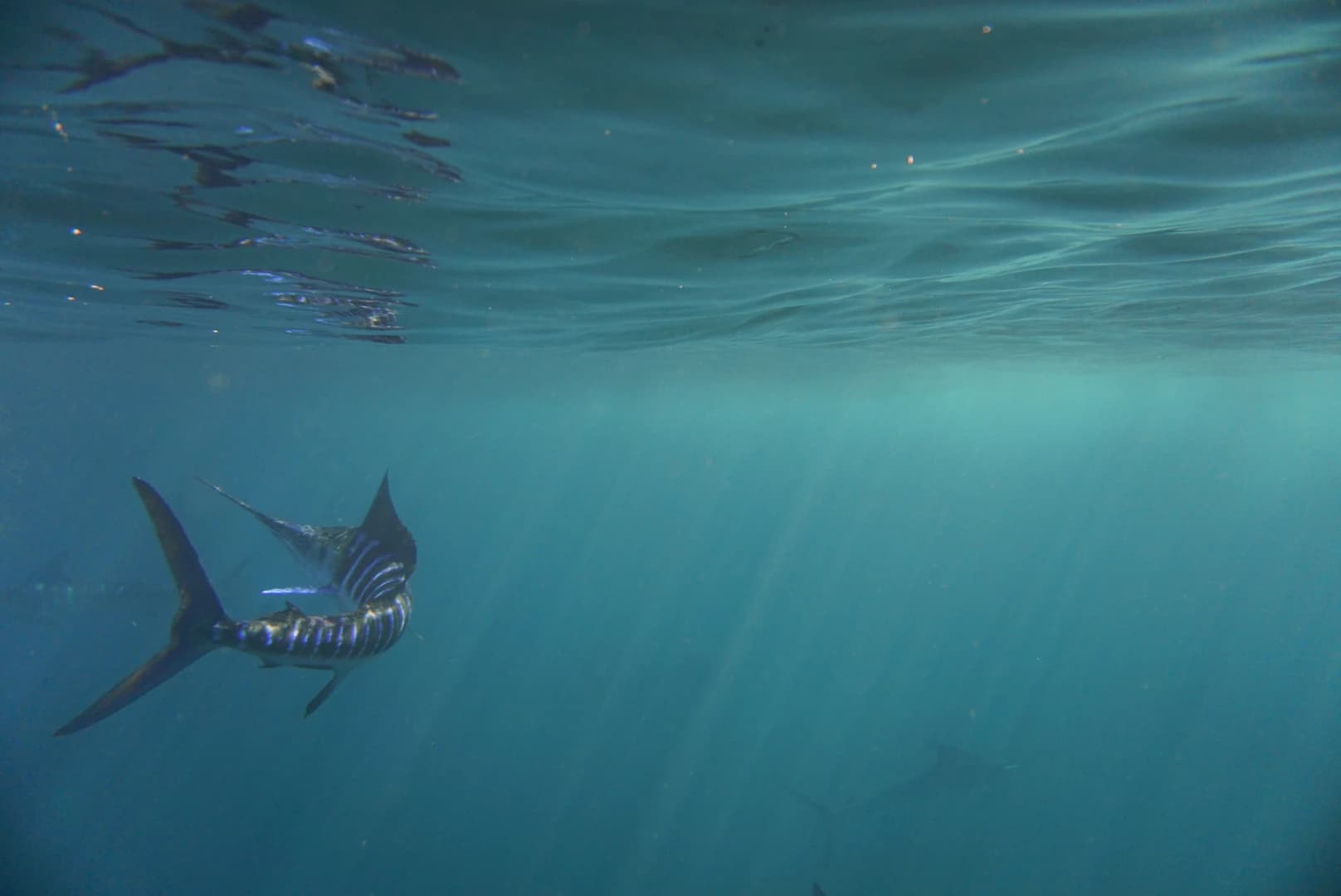
Swordfish in the sardine run
2 / 4
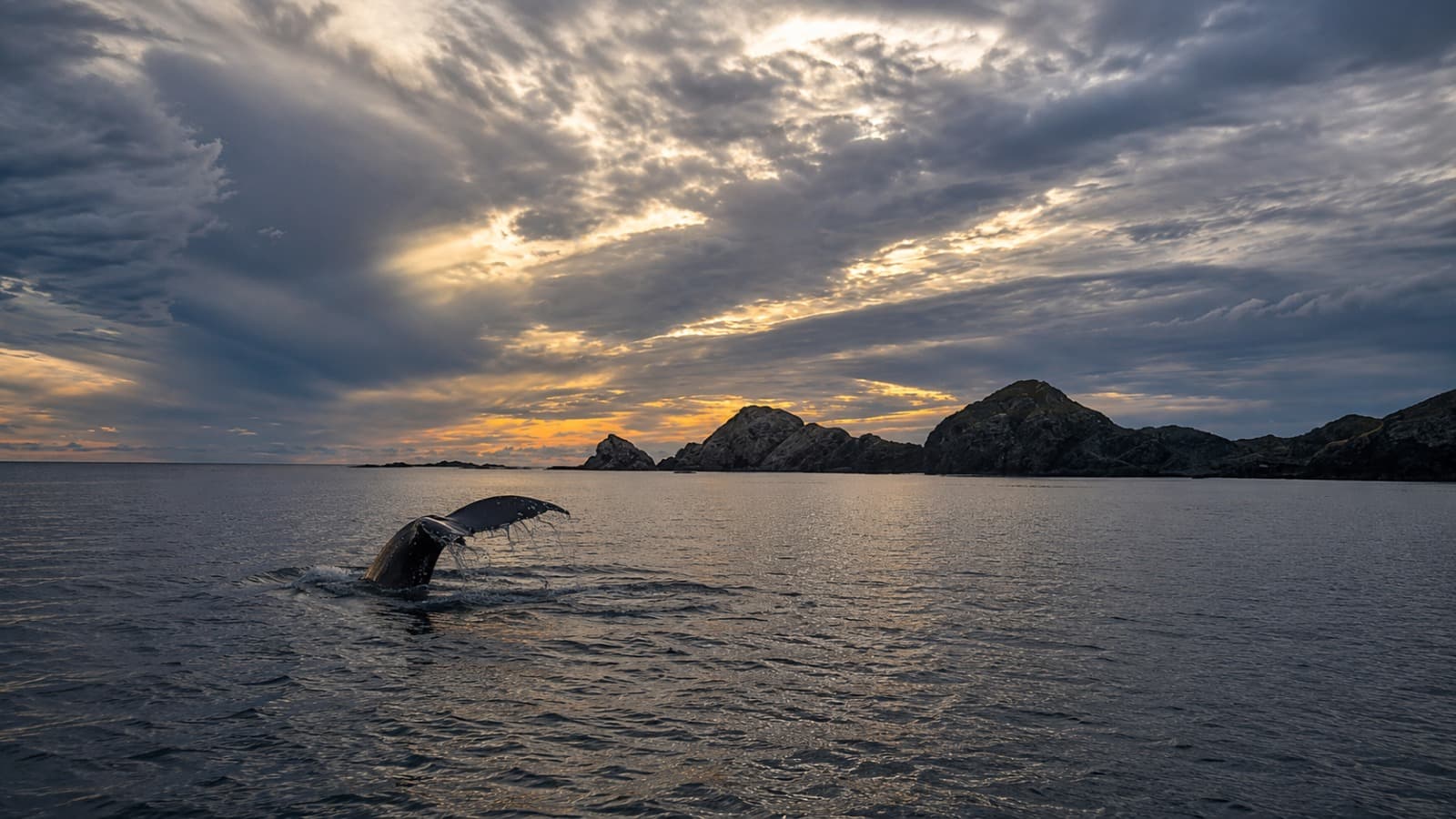
Gray whale tail at sunset in Magdalena Bay
3 / 4
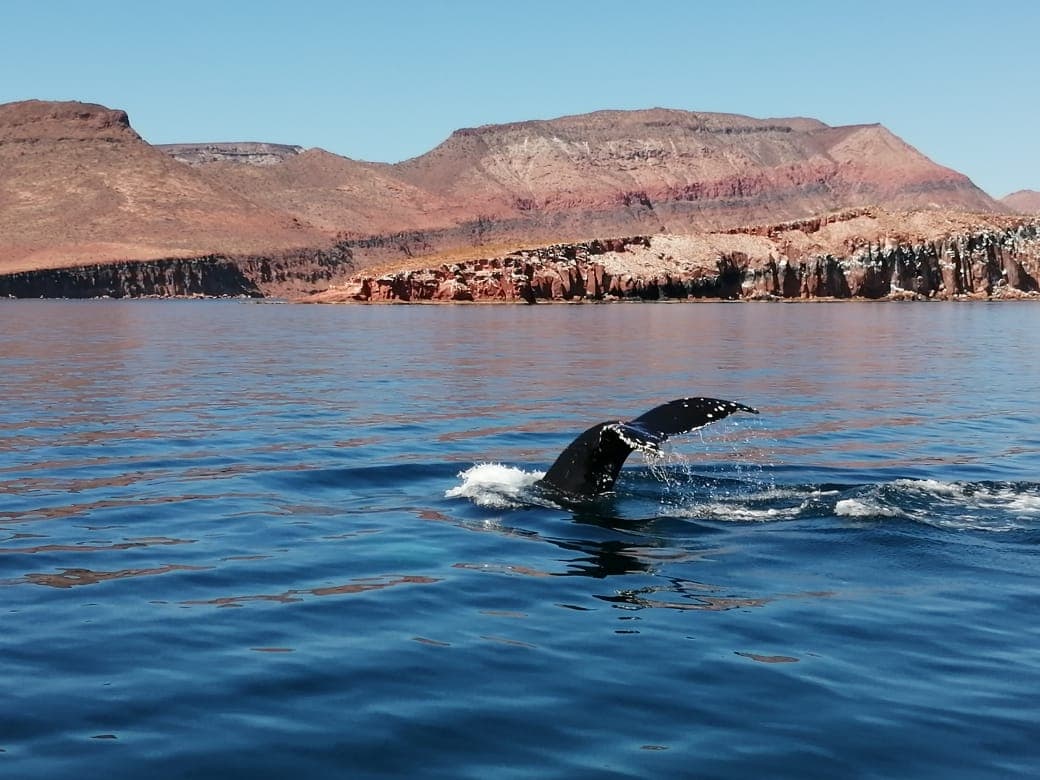
Gray whale spyhopping near the coast of Magdalena Bay
4 / 4
UNESCO Whale Sanctuary
Bahía Magdalena Protected Lagoon
Part of the UNESCO World Heritage Site